Topic: Teacher Education | Inclusive Assessment
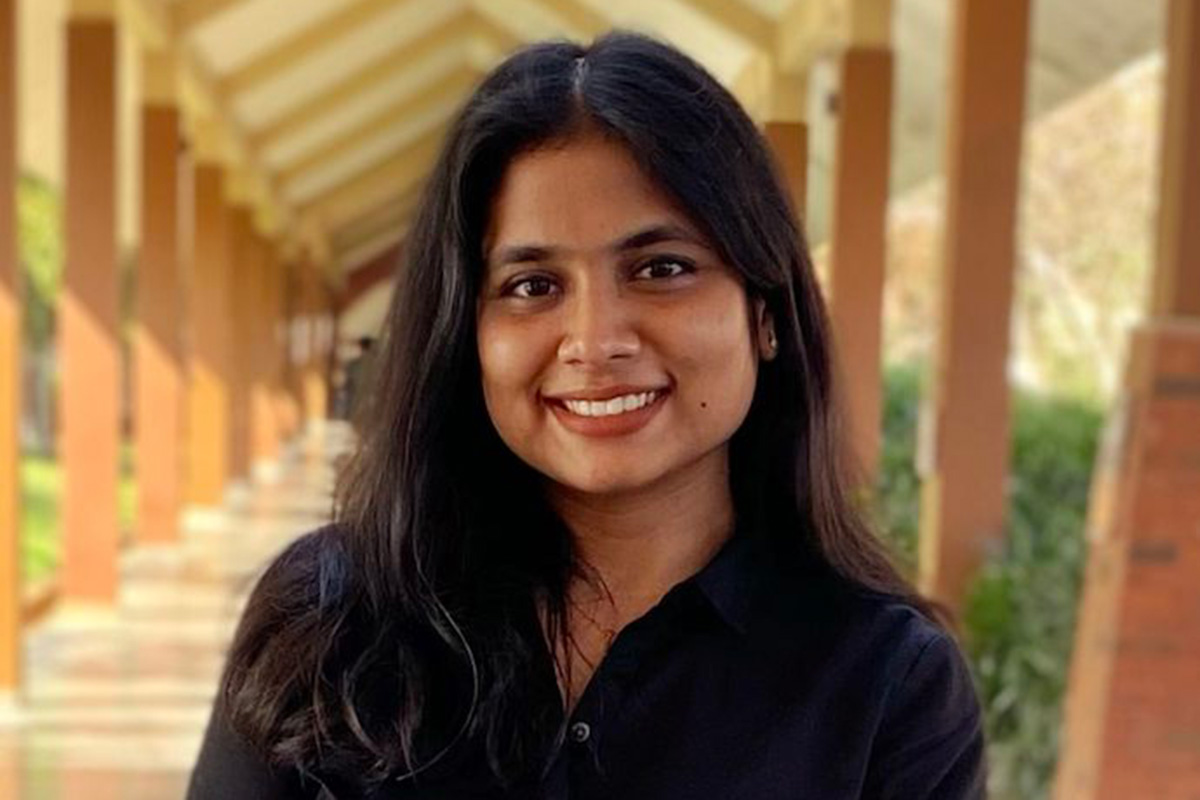
Presenter: Humaira Mariyam B
Presentation details
English language classrooms are increasingly shaped by multimodal and AI-mediated practices. However, teachers often receive limited guidance on how to assess learners fairly across different modalities, collaborative contributions, and levels of AI involvement. Existing output-driven assessment practices continue to prioritise individual performance. While recent scholarship has explored inclusive assessment in higher education, limited research has examined how assessment practices in English language classrooms are being reconsidered in response to these changing learning conditions.
The study is guided by these research questions: (1) What limitations exist within outcome-based assessment practices in creative, collaborative, and AI-supported learning? (2) How are teachers responding to these limitations? (3) How can inclusive assessment practices be designed within complex, diverse learning environments? The study is informed by affirmative approaches to assessment and care-centred pedagogy, which emphasise flexibility, participation, learner wellbeing, and multiple ways of demonstrating learning.
This qualitative exploratory study draws on semi-structured interviews with twelve English language teachers who incorporate creative and collaborative assignments such as podcasts, digital storytelling, and collaborative action projects as part of classroom assessment. Classroom tasks, assessment rubrics, and feedback practices are analysed.
Preliminary analysis suggests that conventional assessment practices often struggle to address collaborative participation, process, modality, and AI involvement within creative classroom tasks. Teachers responded to these challenges through flexible rubrics, reflective components, peer assessment, process documentation, and feedback. The study proposes an inclusive assessment framework for English language classrooms that attends to participation, creativity, process, and learner differences.
About the presenter
Humaira Mariyam B. is an Assistant Professor in the Department of English and Cultural Studies at CHRIST (Deemed to be University), Bengaluru, India. She is also a PhD scholar in the Department of Humanities and Social Sciences at the National Institute of Technology Tiruchirappalli, India, where she has submitted her thesis and is awaiting her viva voce examination. She holds a Master’s degree in English and Cultural Studies from CHRIST University, Bengaluru.
Her research explores English language education through posthuman and AI-mediated pedagogical frameworks, with a particular focus on LLMs, arts-based learning, multimodality, inclusivity, and sustainable education. Her scholarly work has been published in peer-reviewed Scopus-indexed journals, including Education and Information Technologies, Interactive Learning Environments, Educational Philosophy and Theory, AI & Society, and the Journal of Applied Learning & Teaching. She has presented her work at various international conferences, including at LASALLE College of the Arts, Singapore, with funding from the Indian Council of Social Science Research (ICSSR).